Stir with Catherine

Savor the Story, Stir the Soul

  • “Who is the most confident person you know?”
    Daily writing prompt
    Who is the most confident person you know?

    I want to define what confidence really means. This is important before I even talk about who the most confident person I know is. Confidence isn’t loudness, showing off, or pretending to have everything figured out. Real confidence is a quiet strength. It’s the ability to trust yourself. You can stand on your own decisions. You move through life without needing constant approval from others. It’s knowing your worth even when life tries to shake you.

    Confidence also shows up in how you handle challenges. A confident person doesn’t avoid problems—they face them with a calm mind and a steady heart. They don’t crumble every time something goes wrong. Instead, they remind themselves that they’ve survived worse and can survive this too. That inner stability is what separates real confidence from the fake kind.

    Now, when it comes to choosing the most confident person I know, the answer isn’t simple. Confidence looks different depending on the person and the situation. Some people are confident at work but insecure in relationships. Others are confident socially but struggle with their own thoughts. So it really depends on what confidence you’re talking about.

    I’ve met people who seem confident because they talk a lot, but when life gets real, they fall apart. I’ve also met quiet people who barely speak, yet their presence alone shows strength. That’s why I don’t judge confidence by appearance. I judge it by consistency—how someone carries themselves when no one is watching.

    I look at my own life. I realize that I have shown the most consistent confidence. Not because I’m perfect, but because I’ve learned to trust myself through every season. I’ve faced things that have broken me, yet I’m still standing. That alone is confidence.

    I’ve learned to make decisions based on what brings me peace, not what others expect. I’ve learned to walk away from situations that don’t serve me. I’ve learned to speak up when necessary and stay silent when silence protects my energy. These are the kinds of choices that build real confidence over time.

    Confidence, for me, is also about knowing my strengths and my limits. I don’t try to be everything for everyone. I don’t pretend to be someone I’m not. I stay true to myself, even when it’s not the easiest thing to do. That honesty with myself is what keeps me grounded and strong.

    So when I ask myself who the most confident person I know is, the answer becomes clear. It’s me. Not because I’m better than anyone else, but because I’ve earned my confidence through experience, growth, and self‑awareness. I’ve learned to trust my own voice, and that is something no one can take away from me.

  • “What Strategies Do You Use to Cope With Negative Feelings?”
    Daily writing prompt
    What strategies do you use to cope with negative feelings?

    Life has a way of throwing both sunshine and storms at us. The truth is, you can’t have one without the other. Negative feelings are part of the journey, just like the positive ones. I’ve learned that expecting both makes life a little easier to handle. When you understand that ups and downs are natural, you stop feeling surprised. Heavy things won’t catch you off guard when they show up at your door.

    One thing I remind myself is not to overthink every situation. Overthinking can turn a small problem into something much bigger than it ever needed to be. It can drain your energy, cloud your judgment, and make you feel stuck in your own mind. So when negative feelings come, I try to slow down and not let my thoughts run wild.

    A big part of coping is knowing your own strength. Everyone has a different capacity for stress, sadness, or frustration. What one person can handle easily overwhelm someone else. That’s why it’s important to understand yourself—your limits, your triggers, and your ways of calming down. When you know your own strength, you know how to protect your peace.

    For me, one of the most powerful strategies is finding a calm place to sit with myself. I don’t run from my feelings, and I don’t pretend they don’t exist. I sit quietly, breathe, and let my mind settle. Sometimes the silence alone helps me understand what I’m really feeling and why.

    In those quiet moments, I ask myself questions. What exactly is bothering me? Is this something I can control? Am I reacting to the situation or to my own fears? Asking the right questions helps me separate the real issue from the noise in my head. It gives me clarity, and clarity brings peace.

    Another strategy I use is reminding myself that feelings are temporary. Even the strongest negative emotions eventually fade. When you’re in the middle of them, it feels like they’ll last forever, but they don’t. Holding onto that truth helps me stay grounded instead of panicking or spiraling.

    I also try to focus on solutions instead of problems. Negative feelings can trap you in the “why,” but I try to move toward the “how.” How can I fix this? How can I make myself feel better? How can I move ahead? Shifting my mindset from suffering to problem‑solving gives me back my power.

    Sometimes coping means stepping away from people or situations that make things worse. Not everyone deserves access to your emotions. Protecting your peace is not selfish—it’s necessary. I’ve learned that I don’t have to explain myself to anyone when I need space to breathe and reset.

    Finding inner peace is a personal journey. For me, it comes from honesty, reflection, and patience with myself. I don’t rush the process. I don’t force myself to “get over it” quickly. I let myself feel what I need to feel, but I don’t let those feelings control my whole life.

    At the end of the day, coping with negative feelings is about balance. Life will always bring both positive and negative moments, but how you respond is what shapes your growth. I choose to face my emotions with calmness, self‑awareness, and strength. And every time I do, I learn something new about myself and become a little stronger than before.

  • Quick and Flavorful Chicken Dish for Busy Nights

    There’s something special about a dish that hits every note. You experience heat from the chili pepper and warmth from the ginger. There is depth from the peppercorns and that rich aroma of bay leaves simmering in broth. This chicken recipe is simple and bold. It is perfect for nights when you want something satisfying without spending hours in the kitchen.

    Ingredients

    • Chicken (cut into bite‑sized pieces)
    • 1 onion (sliced or chopped)
    • 3–4 garlic cloves (minced)
    • 4 chili pepper (sliced)
    • salt
    • Ground black pepper (to taste)
    • Whole peppercorns (a pinch)
    • Fresh ginger (grated)
    • Olive oil (2–3 tbsp)
    • Accent seasoning (optional)
    • Bay leaves (2–3)
    • Old Bay seasoning (1–2 tsp)
    • Chicken broth (about 1–2 cups)
    • Finely chopped chives (for garnish)
    • Extra chopped onions for topping

    Step‑by‑Step Preparation

    1. Season and prep the chicken
    • Pat the chicken dry and cut it into bite‑sized pieces.
    • Season lightly with Old Bay, black pepper, and a pinch of Accent.
    1. Build the flavor base
    • Heat olive oil in a skillet or pot over medium heat.
    • Add the chopped onions and sauté until soft and lightly golden.
    • Stir in the garlic, ginger, and sliced chilli pepper.
    • Add a pinch of peppercorns and let everything bloom in the oil.
    1. Cook the chicken
    • Add the seasoned chicken bites to the pan.
    • Sear until the pieces are lightly browned on all sides.
    1. Add broth and aromatics
    • Pour in enough chicken broth to create a light sauce.
    • Add bay leaves and a little more Old Bay if you want deeper flavor.
    • Let it simmer for 10–15 minutes until the chicken is tender and the broth reduces slightly.
    1. Finish the dish
    • Remove bay leaves.
    • Taste and adjust seasoning with black pepper or Accent.
    • Sprinkle finely chopped chives and a little fresh onion on top right before serving.

    Serving Ideas

    • Serve over rice, mashed potatoes, or with crusty bread.
    • Add steamed vegetables on the side for a full meal.

  • “Are you superstitious?”
    Daily writing prompt
    Are you superstitious?

    Before I even answer the question, it’s important to define the word superstitious. Being superstitious means believing that certain actions, signs, or objects can bring good luck or bad luck. This belief persists even when there’s no real proof behind it. It’s the idea that something beyond logic or science influences your life. Examples include knocking on wood, avoiding black cats, or believing a broken mirror brings seven years of bad luck.

    Now, when people ask me if I’m superstitious, my answer is simple: it depends. I don’t fully live my life based on signs or symbols. Yet, I understand why people hold on to certain beliefs. Sometimes superstition comes from culture, sometimes from fear, and sometimes from tradition. For me, it’s not something I rely on, but it’s something I understand.

    I grew up knowing that life is bigger than luck. I believe in purpose, in choices, and in the Creator who designed everything with intention. So I don’t feel the need to depend on superstitions to guide my steps. If something is meant for me, it will find me. If something isn’t, no amount of knocking on wood will change that. That’s just how I see it.

    At the same time, I won’t pretend that certain habits don’t stick with us. Sometimes we avoid things without even thinking about it, not because we believe in superstition, but because it’s familiar. It’s human nature to look for patterns, especially when life feels uncertain. But I try not to let those little habits control my decisions.

    I also think superstition can be a way for people to feel safe. When life gets unpredictable, having a small ritual or belief can make someone feel like they have control. I don’t judge that. Everyone copes differently. But for me, I’d rather put my trust in faith. I believe in wisdom. I rely on the lessons life has already taught me.

    There are moments when I pause and think, “Should I avoid this?” or “Is this a sign?” But then I remind myself that fear shouldn’t be the reason I make choices. I’d rather move with intention than hesitation. I’d rather trust my instincts and my Creator than rely on luck or superstition.

    So am I superstitious? Not really. I’m more spiritual than superstitious. I believe things happen for a reason, not because of a cracked mirror or a ladder I walked under. I believe in timing, in growth, and in the power of decisions. That feels more grounded to me.

    But I also respect that everyone has their own beliefs. Some people find comfort in superstition, and that’s their journey. As for me, I choose to walk through life with awareness, not fear. With faith, not luck. With purpose, not superstition.
    At the end of the day, I’m okay with saying “it depends.” Life is full of moments that make you think twice. But I know who I am, and I know what guides me. And that’s more powerful than any superstition ever is.

  • “Which animal would you compare yourself to and why?”
    Daily writing prompt
    Which animal would you compare yourself to and why?

    People often ask questions like, “If you were an animal, which one would you be?” It’s a fun idea for some, but for me, it has never felt natural. I love animals deeply. Yet, I do not want to become one. Nor do I want to compare myself to one. I believe every creation has its own purpose. If God or the Creator wanted me to be an animal, that’s exactly what I would have been. So I’m perfectly fine being human, with all the lessons, responsibilities, and blessings that come with it.

    Animals are beautiful, loyal, instinctive, and pure in their own ways. I admire them, I respect them, and I enjoy watching how they move through the world. But admiration doesn’t mean imitation. I do not need to take on the identity of a lion to feel strong. I do not need to be a butterfly to feel free. To feel wise, I do not need to be a wolf. I can honor those qualities within myself without borrowing them from another species.

    Being human is already a journey full of challenges and growth. We feel deeply. We think deeply. We carry experiences that shape us uniquely. No animal comparison ever capture this. My story, my personality, and my path are uniquely mine. They don’t need to be matched to a creature just to make sense to someone else.

    Some people choose animals because they want to express something about themselves—courage, softness, independence, or resilience. I understand that. But for me, my identity stands on its own. I don’t need a symbol to explain who I am. I am enough as I am, and I’m learning to embrace that more every day.

    I also believe that comparing myself to an animal would take away from the beauty of both creations. Animals are perfect in their design, and humans are perfect in theirs. We each have our own roles in the world. I don’t want to blur those lines or pretend I fit into a life that was never meant for me.

    Loving animals doesn’t mean wanting to be one. It means appreciating them for what they are—innocent, instinctive, and free in ways humans are not. And at the same time, appreciating myself for what I am—capable of growth, reflection, choices, and change. That’s a gift I don’t take lightly.

    So when someone asks me which animal I would compare myself to, my answer is simple: none. Not out of pride, but out of understanding. I am human for a reason. I am built for this journey, this purpose, this experience. And I honor that by staying true to who I am.
    At the end of the day, I don’t need to be like an animal to feel powerful, peaceful, or purposeful. I just need to be myself. And that, to me, is more than enough.

  • “Write a letter to your 100-year-old self.”
    Daily writing prompt
    Write a letter to your 100-year-old self.

    A Letter to My 100‑Year‑Old Self
    Dear Future Me,

    I hope this letter reaches you in a place of peace. I hope you are surrounded by the quiet joy. This is the joy that only comes from a life lived with intention. At 100 years old, I imagine you’ve seen enough sunrises, heartbreaks, miracles, and lessons to fill a library. I wonder what your days look like now. Do they include slow mornings and soft laughter? Is your heart no longer rushing for anything that doesn’t matter?

    I’m writing to you from a time when I’m still learning. I am still growing. I am still figuring out what deserves my energy and what I should release. I hope you’re proud of how far I’ve come. I hope you can look back and see that every step, even the uncertain ones, were taken with courage. I hope you smile. Know that I tried my best to build a life. This life would make you comfortable, safe, and fulfilled.

    I imagine you’ve mastered the art of letting go. You’ve let go of people who couldn’t love you right. You’ve let go of moments that tried to break you. You’ve also let go of expectations that were never yours to carry. I hope you kept your softness, even when the world tried to harden you. I hope you kept your boundaries too, because they protected the parts of you that were worth saving.

    Tell me, at 100, do you still find joy in the simple things? A warm meal, a familiar song, the sound of rain, the comfort of your own company. I hope you never lost the ability to appreciate the small moments. They were always the ones that mattered most. I hope you still laugh easily, even if it’s just at your own memories.

    I wonder what you’ve learned about love—how it changed, how it stayed, how it surprised you. Did you love boldly? Did you love yourself enough? Did you finally understand that the right people never make you question your worth? I hope you surrounded yourself with those who added peace, not chaos.

    I hope you’re still learning, even now. Not in the way of textbooks or deadlines, but in the gentle way life teaches you—through reflection, gratitude, and acceptance. I hope you look back at the younger version of us and whisper, “You did well. You didn’t give up on me.”

    f there’s one thing I wish for you, it’s that you feel fulfilled. Not because everything went perfectly, but because you made meaning out of every chapter. I hope you forgave yourself for the mistakes, celebrated the victories, and honored the journey in all its forms.

    And finally, I hope you’re resting. Truly resting. Knowing that the life you lived—messy, beautiful, unpredictable—was enough. More than enough. I hope you sit with that truth and let it warm you from the inside out.
    With love,
    Your younger self

  • “What experiences in life helped you grow the most?”
    Daily writing prompt
    What experiences in life helped you grow the most?

    I always come back to one simple truth when I think about the moments that shaped me the most. Growth started the day I decided to be myself. Not the version people expected, not the version I thought I had to be, but the real me. I learned to stand in my own identity. Even when it felt uncomfortable, it became one of the biggest turning points in my life.

    Being myself didn’t happen overnight. It took time, mistakes, and a lot of unlearning. I had to let go of the pressure to fit in and stop shrinking to make others comfortable. Every time I chose authenticity over approval, I grew a little more. It taught me confidence, self-respect, and the power of trusting my own voice.

    Another major part of my growth came from learning new skills. Every skill I picked up—big or small—showed me that I was capable of more than I thought. Whether it was something practical, creative, or personal, each new skill opened a door. It reminded me that growth isn’t just emotional. It’s also about expanding what you can do. Growth is about realizing who you can become.

    Learning skills also taught me patience. You don’t master anything in a day. You try, fail, try again, and slowly improve. That process alone builds discipline and resilience. It showed me that progress is a journey, not a race. Every step ahead counts, even the small ones.

    Taking advice when I needed it was another experience that helped me grow. I learned that listening doesn’t make you weak—it makes you wise. The right advice at the right moment can save you time, energy, and unnecessary pain. But I also learned to filter advice, because not every voice deserves space in your life.

    Some advice pushed me to level up. Some helped me avoid mistakes. Some reminded me to stay grounded. And some taught me what not to do. Every piece, whether helpful or not, taught me something about myself and the direction I wanted to go.

    Through all of this, I realized that growth isn’t loud or dramatic. It’s quiet. It’s choosing better habits, better people, better environments. It’s learning to trust yourself while still being open to learning from others. It’s knowing when to stand firm and when to let someone guide you.

    Looking back, the experiences that helped me grow the most weren’t the perfect moments—they were the real ones. Being myself, learning new skills, and taking advice when it mattered shaped me into someone stronger, wiser, and more grounded. Growth is a lifelong journey, but these experiences gave me the foundation I needed to keep moving ahead.

  • Comforting One-Pot Soup Recipe for Cold Days

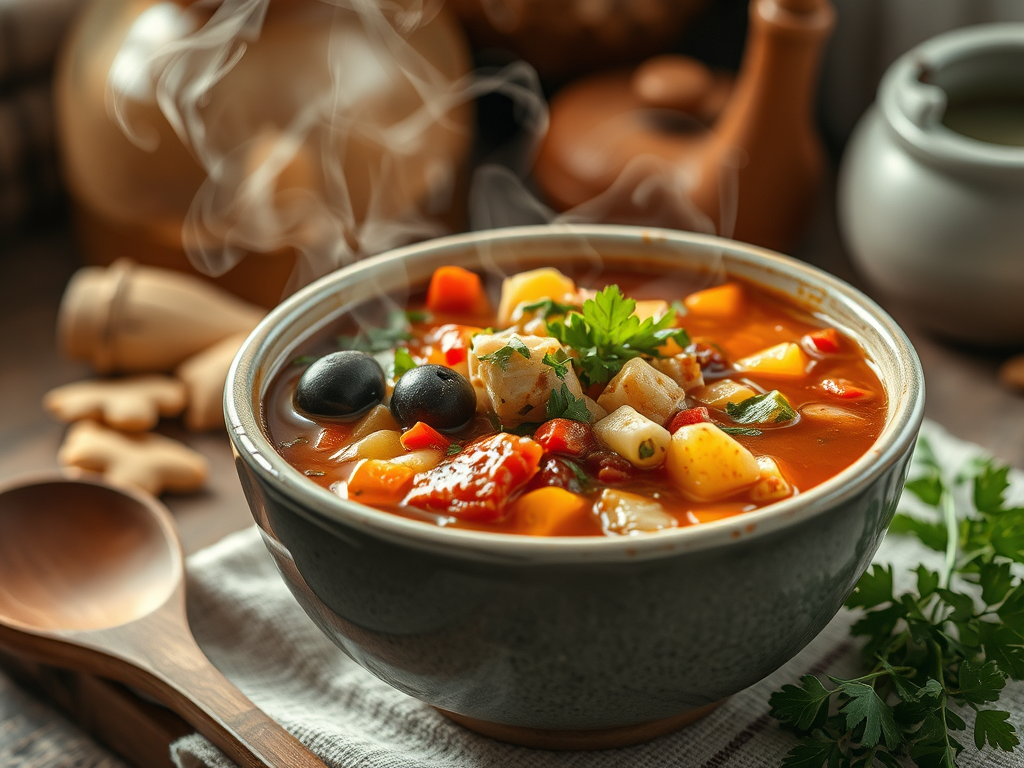
    On cold days like this, there’s a special comfort that only a warm bowl of soup can give. It’s not just about eating. It’s about slowing down. It’s about breathing in the steam. It’s about feeling the warmth spread from your hands to your heart. This soup makes you feel taken care of. It reminds you of home. Even if you’re the one creating it from scratch.
    This soup is simple, rich, and full of flavor. It starts with a good broth. You can use store-bought or homemade broth. The recipe builds layer by layer with herbs, spices, and vegetables. A little protein is added to make it filling. You can make this recipe on a lazy afternoon. Let it simmer while the weather does whatever it wants outside. By the time it’s done, your whole kitchen will smell like comfort.
    What I love about this soup is that it’s flexible. You don’t need fancy ingredients. You just need basics: broth, garlic, onion, herbs, mixed vegetables, and some ground meat and eggs to make it hearty. The olives and oil add a little extra richness and depth. It’s a “use what you have” meal that still feels special.

    Below is a step‑by‑step way to bring this soul‑warming soup to life.

    Ingredients

    • Broth:
    • Chicken broth or homemade broth (about 6–8 cups)
    • Aromatics and herbs:
    • Garlic (3–4 cloves, minced)
    • Onion (1 medium, chopped)
    • Bay leaves (2–3)
    • Basil (dried or fresh)
    • Thyme (dried or fresh)
    • Ginger (small piece fresh, grated, or 1 tsp ground)
    • Accent (optional, for flavor boost)

    Vegetables and extras:

    • Mixed vegetables (fresh or frozen, about 2–3 cups)
    • Olives (a handful, sliced)
    • Oil (2–3 tbsp, olive or vegetable)
    Seasoning:
    • Seasoning salt (to taste)
    • Ground black pepper (to taste)
    • Protein:
    • Ground meat (beef, turkey, or chicken, about 1 lb)
    • Eggs (2–3)

    Step‑by‑step preparation

    1. Prepare the base
    • Heat oil in a large pot over medium heat.
    • Add the chopped onion and cook until soft and slightly golden.
    • Stir in the garlic and ginger, cooking for another minute until fragrant.
    1. Build the flavor
    • Pour in your chicken or homemade broth.
    • Add bay leaves, basil, thyme, and a pinch of Accent if using.
    • Bring it to a gentle boil, then reduce to a simmer.
    1. Cook the ground meat
    • In a separate pan, brown the ground meat over medium heat.
    • Season lightly with seasoning salt and black pepper.
    • Once cooked, drain any excess fat and add the meat to the soup pot.
    1. Add the vegetables
    • Stir in the mixed vegetables (fresh or frozen).
    • Add the sliced olives for extra flavor.
    • Let everything simmer together for about 10–15 minutes so the flavors blend.
    1. Season the soup
    • Taste the broth and adjust with seasoning salt and ground black pepper as needed.
    • Remove bay leaves if you prefer.
    1. Add the eggs
    • In a small bowl, beat the eggs.
    • Slowly drizzle the beaten eggs into the simmering soup while gently stirring in a circular motion.
    • This will create soft egg ribbons throughout the soup.
    1. Final simmer
    • Let the soup simmer for another 5–10 minutes so the eggs set and everything comes together.
    • Turn off the heat and let it rest for a few minutes before serving.

    You ladle this soup into a bowl. You’re not just serving food. You’re serving warmth, comfort, and a little bit of peace. It’s perfect for cold weather, long days, or any moment when your soul needs something soothing.

  • What Experiences in Life Helped You Grow the Most?
    Daily writing prompt
    What experiences in life helped you grow the most?

    When I look back at my life, I realize that everything I’ve been through has shaped me in some way. The good moments played a part in who I am today. The painful ones influenced me too. The people I loved and the people I lost all contributed to the person I have become. Growth didn’t come from one big event. It resulted from many experiences. These experiences pushed me and challenged me. They taught me lessons I didn’t even know I needed.

    Love has been one of my greatest teachers. Loving the right people showed me what support feels like. Loving the wrong people taught me what I should never accept again. Every relationship, whether it lasted or not, helped me understand myself better. It taught me how to give. It taught me how to get. Most importantly, it taught me how to walk away when something no longer serves my peace.

    Failure also played a huge role in my growth. I failed at things I wanted. I lost opportunities I thought were meant for me. Watching plans fall apart hurt. Those moments humbled me. They forced me to slow down, rethink, and rebuild. Failure taught me resilience. It showed me that starting over isn’t the end; sometimes it’s the beginning of something better.

    Family has shaped me in ways I didn’t always appreciate at the time. The support taught me resilience. The disagreements showed me different perspectives. The expectations set standards. The disappointments pushed me to grow. All of it taught me how to stand on my own two feet. Family teaches you patience, boundaries, forgiveness, and sometimes distance. It teaches you that love can be complicated, but it can also be the strongest foundation you have.

    Friends have been another part of my growth journey. Some friends stayed, some left, and some were only meant to be in my life for a season. Each one taught me something. The loyal ones showed me what real friendship looks like. The fake ones taught me to trust my instincts. The ones who drifted away reminded me that not everyone is meant to grow with you, and that’s okay.

    I’ve learned one of the biggest lessons in life. Not everything will work out the way you want it to. Some things fall apart. Some people disappoint you. Some dreams change. But the things that do work out are the ones that stay. They are the ones that grow. They are the ones that feel right. Those are the things that matter. You don’t need everything to work. You just need the right things to work.

    My growth has been a step‑by‑step process. Nothing happened overnight. I had to learn patience, discipline, and acceptance. I had to learn how to let go of what wasn’t meant for me and make room for what was. Every step, even the small ones, moved me onward. Even when I didn’t see progress, I was still growing.

    Life has a way of teaching you through experience, not theory. You don’t grow because someone tells you what to do. You grow because life puts you in situations that force you to learn. When you look back, you realize that every moment was preparing you for something bigger. This includes even the moments you didn’t understand at the time.

    So when I think about what helped me grow the most, the answer is simple: everything. Every person, every mistake, every blessing, every loss, every step. Growth isn’t one moment. It’s the whole journey. And I’m still learning, still evolving, still becoming the person I’m meant to be.

  • “Do you believe in fate/destiny?”
    Daily writing prompt
    Do you believe in fate/destiny?

    Fate is talked about by some people like it’s a straight line you can’t escape. Others see destiny as something you shape with your own hands. For me, it’s never that simple. I don’t fully reject the idea of fate, but I don’t fully trust it either. Life has shown me that some things feel meant to be, while others feel like burdens you never asked for. So before I say yes or no, I have to define what fate really means to me.

    There are moments in life that feel like a curse. These include situations you didn’t choose and patterns you didn’t create. They also involve challenges that seem to follow you no matter how hard you try to break free. If that’s “fate,” then I don’t want it. I believe some things are placed in your life to test you, not to trap you. And even if something feels destined, you still have the power to change the direction. A curse only stays a curse if you accept it as your final story.

    But then there are blessings. These include unexpected opportunities. The right people show up at the right time. Doors open without you forcing them. Those moments feel like destiny in the best way. They remind you that life isn’t always random. Sometimes things align so perfectly that you can’t help but wonder if something bigger is guiding you. Those are the parts of fate I don’t mind believing in.

    Believing in destiny, for me, depends on which side of life I’m standing on. When things are going well, it’s easy to say, “This was meant for me.” When life is heavy, it’s harder to accept that anything painful is part of a plan. That’s why my belief isn’t fixed. It shifts with experience. It grows with personal development. It changes with the lessons life keeps teaching me.

    People say, “Your life is in your hands,” and I agree with that. You can choose your actions, your mindset, your boundaries, and your direction. But sometimes something happens — good or bad — that changes everything. And in those moments, you realize you’re not in control of everything. Life can surprise you, interrupt you, or bless you without warning. That’s where fate steps in.

    I think destiny is a partnership. You do your part, and life does its part. You make choices, but you also get things you didn’t ask for. You walk your path, but sometimes the path shifts under your feet. You can’t control every detail, but you can control how you respond. That balance between effort and surrender is where I find my truth.

    Some people believe everything is written. Others believe nothing is. I fall somewhere in the middle. I believe in the power of choice, but I also believe in timing. I believe in hard work, but I also believe in alignment. I believe in responsibility, but I also believe in mystery. Life is too complicated to fit into one answer.

    So do I believe in fate or destiny? It depends. I believe some things are meant to change, even if they start as curses. I believe some blessings are placed in your life for a reason. And I believe that you won’t always understand the purpose until later. Life is your own, but it also has a way of surprising you. You won’t always know what’s destined until it happens.

    In the end, I choose to believe in what brings me peace. If calling something destiny helps me accept it, I’ll do that. If calling something a choice helps me grow from it, I’ll do that too. My belief isn’t fixed — it’s flexible, just like life itself.

Stir with Catherine

Savor the Story, Stir the Soul

Skip to content ↓